
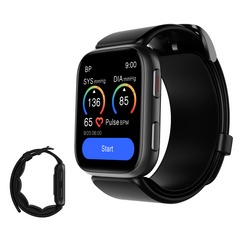
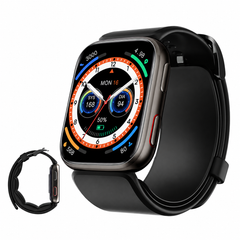
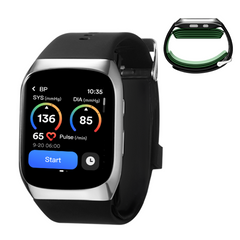
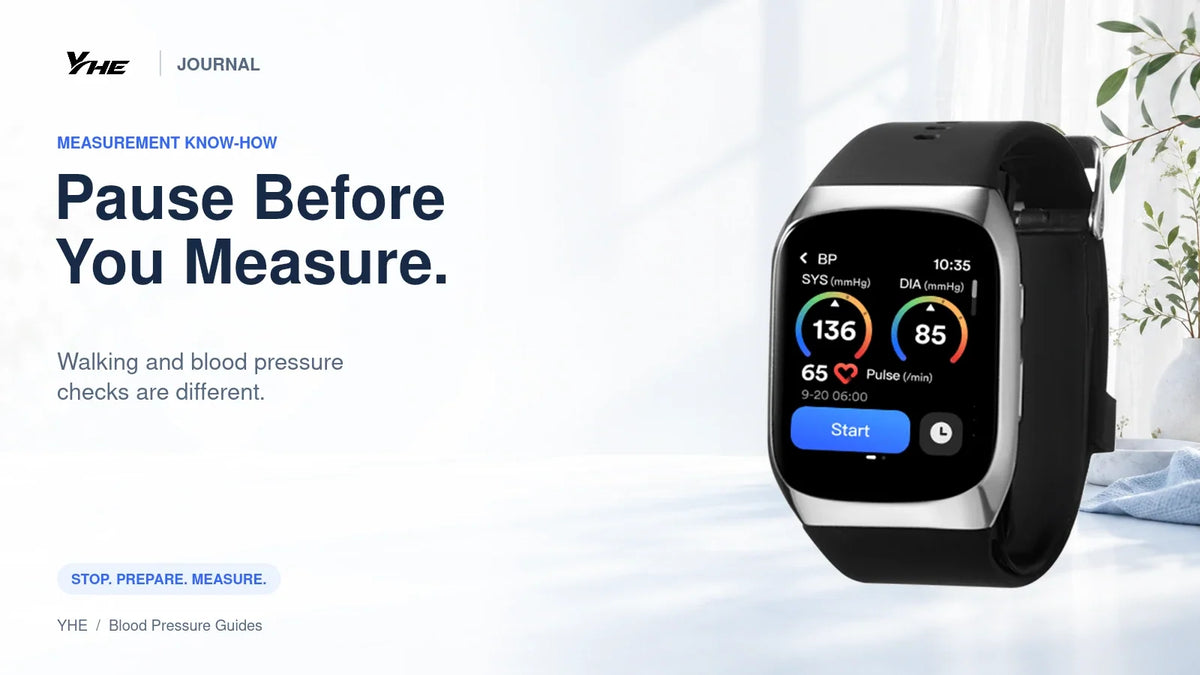
Do not take a YHE BP Doctor blood pressure reading while you continue walking. Fit, Ultra and Med use user-started wrist cuff measurements that require stillness and correct positioning. Wearing the watch during a walk is different from measuring blood pressure during the walk.
If you want a resting reading, plan a suitable break and follow the preparation instructions. Simply stopping for a few seconds after brisk activity is not the same as a properly prepared resting measurement.
In this guide
- Why “wear it anywhere” does not mean “measure while moving”
- Three situations that are easy to confuse
- How long should you wait after exercise?
- A practical walking-day routine
- Follow the wrist-specific instructions
- What if you feel unwell during exercise?
- Is a wrist device still useful for someone who enjoys walking?
- Frequently asked questions
Why “wear it anywhere” does not mean “measure while moving”
A wearable is convenient because it stays with you. That portability does not eliminate the measurement conditions the device needs.
During walking, your arm moves, muscles contract and wrist height changes. A reading attempted in those conditions should not be treated as an ordinary seated resting result.
Imagine a watch that you wear to the park. Its practical advantage is being available when you later reach a suitable place to prepare and sit. It is not a promise that it monitors cuff-based blood pressure every step of the route.
Three situations that are easy to confuse
| Situation | What it means | Practical response |
|---|---|---|
| You are actively walking | You are moving rather than resting | Do not attempt a routine YHE wrist BP check while continuing to walk |
| You just stopped after a brisk walk | Activity may still affect the reading | Allow the recommended preparation interval |
| You have prepared and rested in a suitable place | You can follow a seated measurement routine | Use the exact model's instructions |
Keeping those situations separate makes records easier to interpret. A note saying “after walk” is more useful than presenting that result as if it were taken under your usual resting conditions.
How long should you wait after exercise?
For standard home measurements, the CDC identifies recent exercise as a factor that can affect readings. General preparation guidance includes avoiding exercise for 30 minutes beforehand and sitting quietly for at least five minutes before the measurement.
The quiet rest is not a substitute for the exercise-free interval. Do not finish a demanding workout, sit for five minutes and assume the result is directly comparable with a prepared morning resting reading.
Follow your device instructions and any different plan supplied by your healthcare professional. If a clinician specifically wants exercise-related monitoring, ask which equipment and protocol to use rather than adapting a routine wrist reading yourself.
A practical walking-day routine
Before the walk: if a resting check is part of your agreed schedule, prepare and complete it before starting activity. Keep it separate from hurried last-minute preparations.
During the walk: use the watch only for supported activity functions. Do not interpret heart-rate tracking, a sports mode or a measurement reminder as continuous blood pressure measurement.
After the walk: allow the preparation interval your instructions require. Choose a comfortable seated location and follow the measurement procedure. Record relevant context if the session differs from your normal routine.
This approach lets a portable device fit around your day while keeping the meaning of a resting measurement clear.
Follow the wrist-specific instructions
YHE's measurement guide calls for a correctly fitted cuff, a supported arm, heart-level wrist position and quiet stillness. It also gives model-specific preparation and repeat-reading instructions.
If you repeat a check, use the interval specified for your exact model. A generic upper-arm instruction to take readings one minute apart should not override a longer interval in a watch's instructions.
A watch reminder means it is time to consider taking a measurement. If you are walking, driving or otherwise unable to prepare safely, choose an appropriate opportunity instead of starting immediately.
What if you feel unwell during exercise?
Do not use repeated watch checks to decide whether to ignore symptoms. Stop the activity and seek appropriate medical help. Chest pain, severe shortness of breath, fainting or possible stroke symptoms require urgent assessment.
The AHA's home monitoring guidance explains that readings belong within professional care. A reassuring-looking wearable result does not rule out a medical emergency.
Is a wrist device still useful for someone who enjoys walking?
It may be appealing if you want a personal watch and accept that blood pressure checks are separate, prepared sessions. The buying question is whether you value having that device available, not whether you can skip the pause.
If your main need is a consistent home routine before or after the day, a suitable upper-arm monitor may be the more direct choice. If your healthcare professional needs measurements during normal activity or overnight, discuss the appropriate monitoring system with them.
Compare YHE's watch options on their actual functions, and read the watch versus fitness tracker guide if activity and blood pressure features are getting mixed together.
Frequently asked questions
Can I just stand still for a moment and check?
For a routine resting measurement, a brief standing pause after activity is not equivalent to a properly prepared seated session. Follow the model instructions.
Does heart-rate tracking mean blood pressure is also being tracked?
No. These are different measurements. Supported activity and heart-rate functions do not make YHE's user-started BP checks continuous.
Can I measure immediately after the gym?
Do not label that as a standard resting reading. Follow the recommended exercise-free and quiet-rest intervals, or a clinician's specific protocol.
Can the watch replace exercise testing or ambulatory monitoring?
No such equivalence is established here. Ask your healthcare professional for the appropriate equipment and procedure.
Explore BP Doctor Fit if you want a personal wearable and understand its user-started measurement routine.
Sources
- CDC preparation and measurement guidance
- YHE model-specific measurement guidance
- AHA monitoring guidance
Reviewed for source consistency October 22, 2026. General education only, not an exercise prescription or individualized medical advice.

Leave a comment
This site is protected by hCaptcha and the hCaptcha Privacy Policy and Terms of Service apply.