

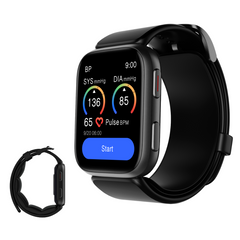
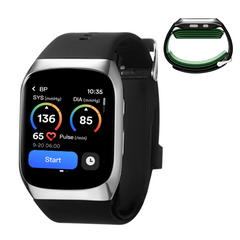
Have you ever wondered what happens after you press Start on your YHE blood pressure smartwatch?
You feel the cuff tighten around your wrist.
A short time later, the watch shows numbers for SYS, DIA, and Pulse.
So how does it work?
The simple answer is:
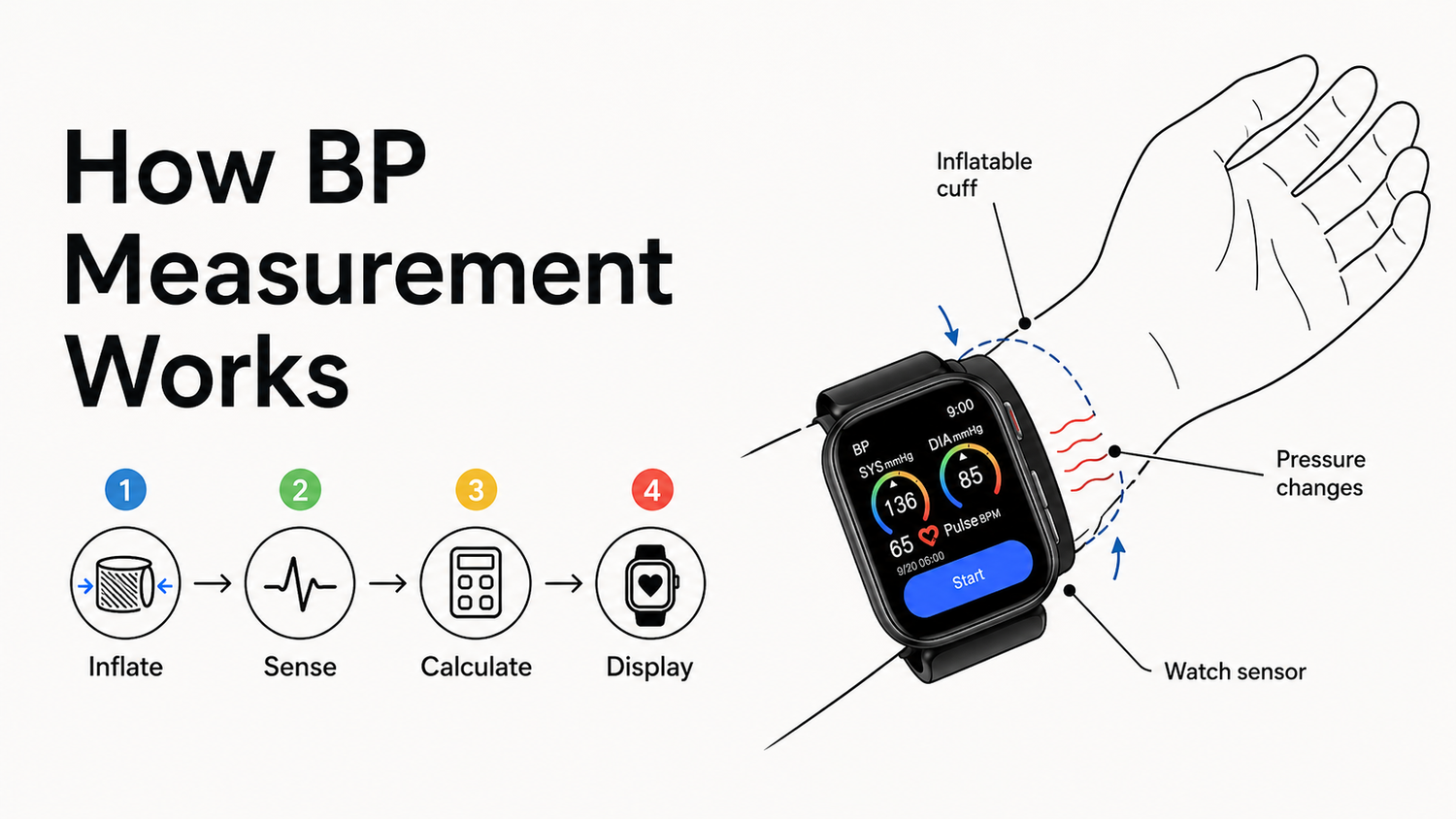
The cuff inflates, senses pressure changes from your heartbeat, and uses those signals to calculate your reading.
Let's walk through it step by step.
1. You Press Start
A blood pressure measurement begins when you start the blood pressure function on the watch.
The inflatable cuff built into the wristband begins to fill with air.
You will feel the cuff gently tighten around your wrist.
This is normal.
The cuff needs to apply pressure around the wrist so the watch can detect changes in the artery during each heartbeat.
2. The Cuff Applies Pressure to Your Wrist
YHE blood pressure smartwatches use an inflatable wrist cuff rather than relying only on an optical sensor.
As the cuff inflates, pressure is applied around your wrist.
Inside the watch, a pressure sensor monitors what is happening while the cuff is pressurized.
Think of it this way:
The cuff applies pressure.
Your heart keeps beating.
Each heartbeat creates a small pressure change that the watch can sense.
3. The Watch Feels the Pressure Changes From Each Heartbeat

Your heart pumps blood through your arteries with every beat.
While the cuff is inflated, those heartbeats create small changes in pressure inside the cuff.
The watch's pressure-sensing system detects these changes.
This type of blood pressure measurement is called the:
Oscillometric Method
The name sounds complicated, but the idea is simple.
The watch is looking at the small pressure changes created by your pulse while the cuff is measuring.
You do not need to understand the mathematics behind it.
Just remember:
Cuff pressure + heartbeat signals = information used for the blood pressure reading.
4. The Watch Processes the Signals
The watch does not simply read one pressure number from the cuff.
It collects the pressure signals that occur during the measurement and processes them inside the device.
The system then determines the blood pressure values that are shown on the screen.
The result is displayed in mmHg, the standard unit used for blood pressure.
You will normally see three main numbers.
What Do SYS, DIA and Pulse Mean?

SYS — Systolic Blood Pressure
SYS is the higher blood pressure number.
It relates to the pressure when your heart contracts and pumps blood.
For example:
SYS 126 mmHg
DIA — Diastolic Blood Pressure
DIA is the lower blood pressure number.
It relates to the pressure when your heart relaxes between beats.
For example:
DIA 78 mmHg
Pulse
Pulse tells you how many times your heart is beating per minute during the measurement.
For example:
Pulse 65 BPM
So a result may look like:
126 / 78 mmHg
Pulse: 65 BPM
5. The Cuff Releases the Pressure
After the watch has collected the information it needs, the cuff releases the air.
The pressure around your wrist decreases.
The watch then displays the completed measurement.
The whole process happens from the wrist without needing a separate upper-arm cuff.
Why Does Wrist Position Matter So Much?
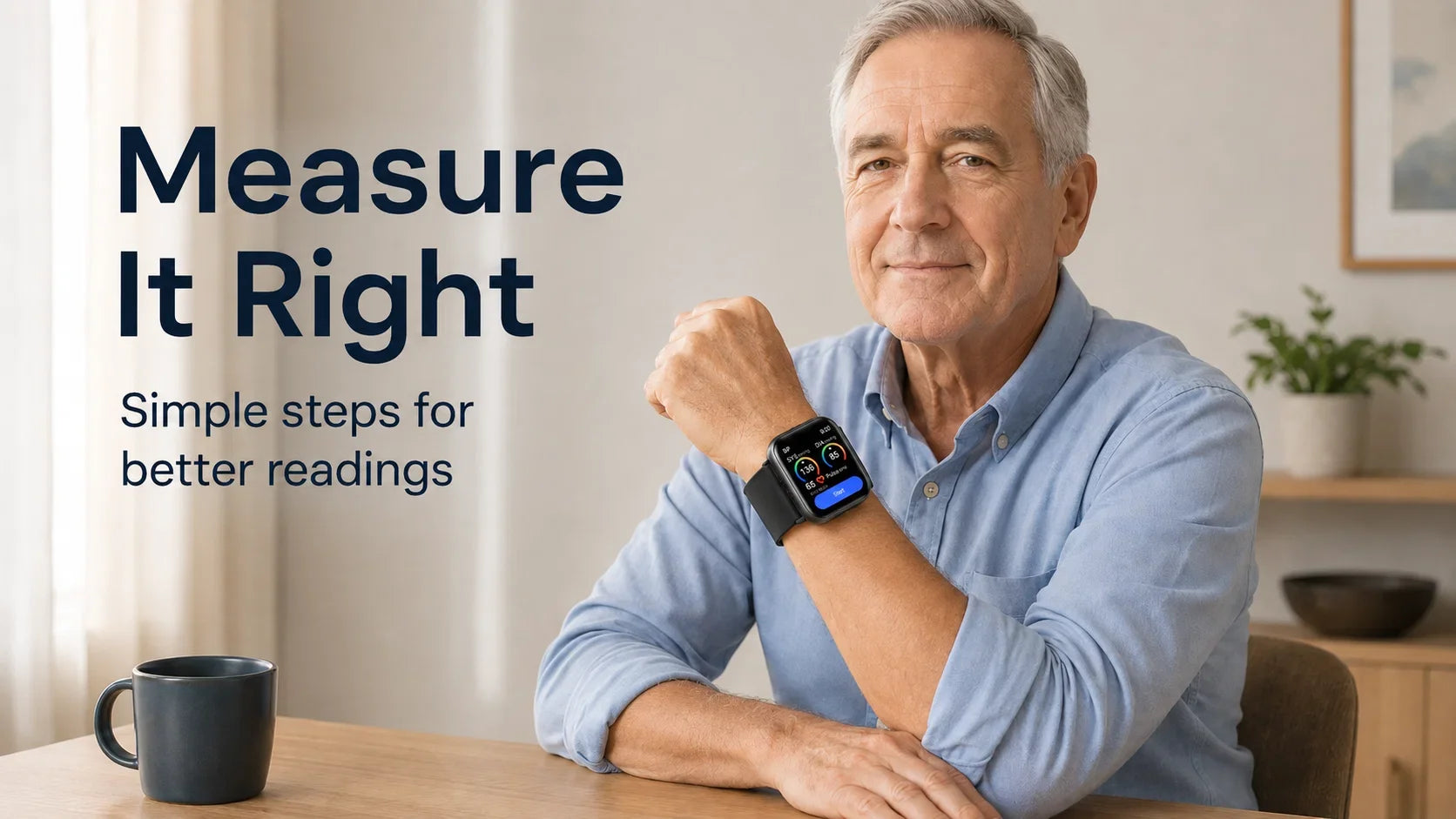
Because the watch is measuring pressure at your wrist, the position of your wrist matters during the measurement.
Your wrist should be approximately at the same height as your heart.
If the wrist is too low, the reading may be higher.
If the wrist is too high, the reading may be lower.
That is why YHE's instructions repeatedly tell users to bring the wrist toward the chest and keep it at heart level.
A simple rule:
Wrist near your chest. Watch at heart level.
Why Does the Watch Need to Fit Snugly?
The inflatable cuff needs good contact with your wrist.
If the watch is too loose, the pressure signal may become unstable.
If it is worn incorrectly, the watch may also have difficulty completing the measurement.
For BP Doctor Fit / S7, the cuff should sit flat against the wrist without:
-
Folding
-
Tilting
-
Twisting
-
Large gaps
Correct fit helps the watch pick up a cleaner pressure signal.
Why Should You Stay Still?
Remember what the watch is trying to detect:
Very small pressure changes caused by your heartbeat.
Now imagine moving your hand, talking, clenching your fist or shaking the table while the watch is trying to read those signals.
Those movements can create extra interference.
That is why you should stay:
Quiet. Relaxed. Still.
Until the measurement is complete.
Why Can Two Readings Be Different?
Blood pressure is not one fixed number.
It can change throughout the day.
Your reading may be affected by things such as:
-
Exercise
-
Stress or emotion
-
Eating
-
Smoking
-
Alcohol
-
Temperature
-
Talking
-
Body position
-
Measurement time
Even the same person may get different readings at different times.
For a better view of your blood pressure over time, try to measure under similar conditions and at roughly the same time each day.
If taking another measurement, allow time between readings and stay relaxed.
A Simple Way to Remember How It Works

You do not need to remember the word “oscillometric.”
Just remember these four steps:
INFLATE → SENSE → CALCULATE → DISPLAY
INFLATE
The wrist cuff fills with air.
SENSE
The pressure sensor detects small changes caused by each heartbeat.
CALCULATE
The watch processes the pressure signals.
DISPLAY
Your SYS, DIA and Pulse appear on the screen.
That's the basic idea behind blood pressure measurement in a YHE blood pressure smartwatch.
One Important Reminder
Blood pressure readings can be affected by your posture, wrist position, cuff fit, movement and your physical condition at the time of measurement.
Always follow the instructions for your specific YHE model.
If a reading seems unusual, relax, check your wearing position and measurement posture, and measure again according to the user manual.
Blood pressure information should be considered together with your overall health information. If you are concerned about your readings or repeatedly receive unusual results, speak with a qualified healthcare professional.

Leave a comment
This site is protected by hCaptcha and the hCaptcha Privacy Policy and Terms of Service apply.