

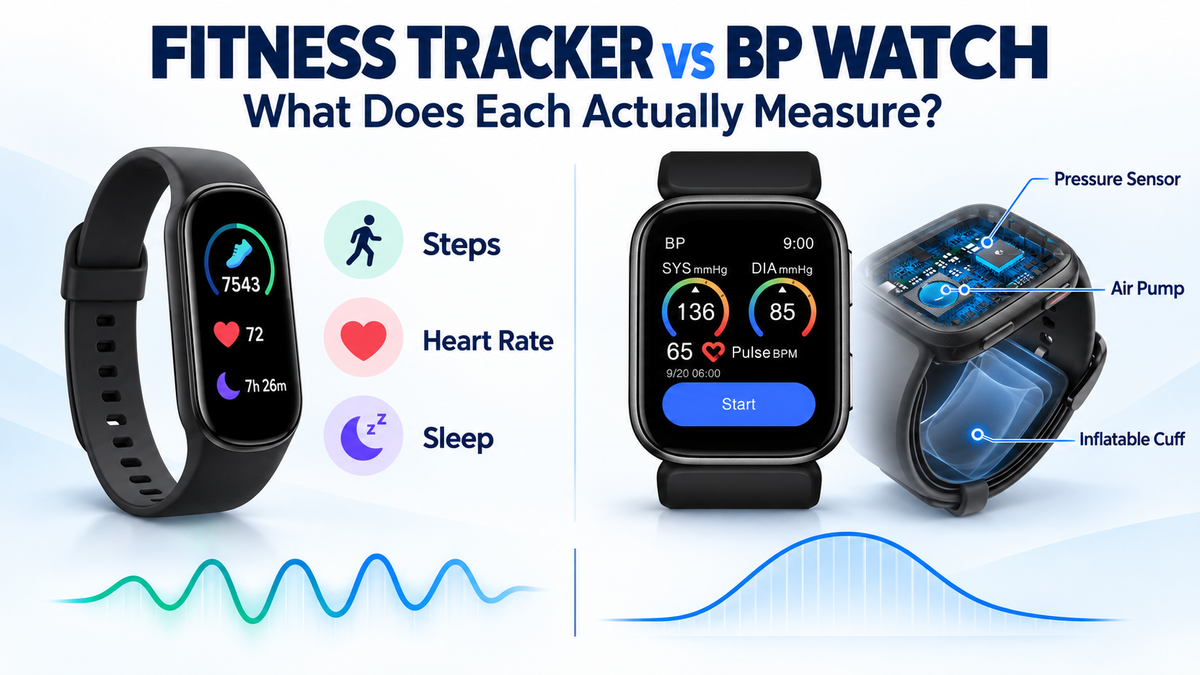
A standard fitness tracker and a blood pressure watch may look similar, but they do not necessarily measure the same things. Most activity-focused trackers use motion and optical sensors to estimate steps, workouts, heart rate and sleep. A true cuff-based blood pressure watch adds a physical inflatable cuff and a pressure-sensing measurement cycle to produce systolic and diastolic readings. Some other watches only estimate BP or provide hypertension-related notifications. Before buying, check the measurement method—not just whether the product page contains the words “blood pressure.”
The Short Answer: The Label Does Not Tell You the Method
The phrase “fitness tracker with blood pressure monitor” is used loosely online. It can refer to devices with very different hardware, outputs and user workflows.
|
Question |
Activity-focused fitness tracker |
Sensor-based BP feature |
Inflatable-cuff BP watch |
|
Primary job |
Track activity and wellness metrics |
Estimate BP or identify a BP-related pattern, depending on the device |
Run a user-started cuff measurement at the wrist |
|
Common hardware |
Motion sensor; often an optical PPG sensor |
Optical/electrical sensors plus an algorithm; some systems require calibration |
Physical air cuff, pump and pressure sensor |
|
Typical outputs |
Steps, activity, heart rate, sleep estimates; features vary |
Estimated SYS/DIA or a notification; features vary |
SYS, DIA and pulse after a measurement cycle |
|
Physical cuff inflates |
Usually no |
Usually no |
Yes |
|
Is BP continuous? |
No BP unless a specific BP method is documented |
Do not assume; check the manufacturer’s exact claim |
No for YHE Fit, Ultra and Med; readings are on demand |
|
What to verify |
Which metrics are measured vs calculated |
Calibration, region, phone compatibility, intended use and authorization |
Wrist fit, cuff design, measurement instructions and intended use |
|
Buying rule If the listing does not explain what sensor or cuff creates the blood pressure result, do not treat “BP tracking” as a complete product specification. |
What an Ordinary Fitness Tracker Actually Measures
Fitness trackers vary, but most consumer models build their outputs from a combination of motion sensing, optical pulse sensing and software estimates.
1. Motion and activity
An accelerometer detects movement. Software can turn that signal into estimates such as step count, active minutes, workout type, distance and calories. These are useful fitness metrics, but they are not pressure measurements inside an artery.
2. Heart rate and pulse-related signals
Many wearables use photoplethysmography (PPG), an optical technique that detects changes in reflected light as blood volume changes with each heartbeat. A peer-reviewed NIH-hosted review explains that wearable PPG is widely used for heart-rate monitoring. Read the PPG review. That optical pulse signal is not automatically the same thing as an inflatable-cuff blood pressure measurement.
3. Sleep and wellness estimates
Sleep duration, sleep stages, stress scores and calorie estimates are usually calculated from sensor data and algorithms. Because features and methods differ by brand and model, the correct question is not simply “Does it track health?” but “Which metric is being sensed, which is being estimated, and what does the manufacturer say the output is for?”
Heart Rate Is Not Blood Pressure
Heart rate is the number of heartbeats per minute. Blood pressure is the pressure of circulating blood against artery walls, usually reported as systolic and diastolic values in millimeters of mercury (mm Hg). One can change without the other moving in the same direction, so a heart-rate sensor alone should not be described as a blood pressure cuff.
What an Inflatable-Cuff Blood Pressure Watch Measures
A cuff-based blood pressure watch adds a physical pressure cycle. The cuff inflates around the wrist, a pressure sensor detects oscillations associated with the pulse, and an algorithm derives systolic and diastolic values. This is an oscillometric workflow—the same broad principle used by many automatic cuff monitors, although the measurement site, hardware and validation can differ.
For a deeper explanation of inflation, pressure oscillations and signal processing, see how oscillometric wrist blood pressure measurement works.
On-demand is not continuous blood pressure monitoring
BP Doctor Fit, Ultra and Med run a blood pressure cycle when the user starts a reading. Their product documentation does not describe them as continuous, passive or automatic 24-hour blood pressure monitors. A watch may track heart rate in the background while still requiring a separate, user-started cuff cycle for blood pressure.
This distinction is also why inflatable-cuff and optical blood pressure watches should be compared by method, not by category name alone.
A Five-Step YHE Wrist Measurement Routine
The following checklist combines current YHE instructions with general home blood pressure technique from the CDC. Always follow the instructions for the exact model you own and any guidance from your health care professional.
1. Confirm the wrist range. Fit and Ultra list an approximate BP wrist fit of 14–22 cm (5.5–8.7 in). Med lists approximately 14–20 cm (5.5–7.8 in). The product’s stated fit does not cover wrists outside the listed range.
2. Wear it on bare skin. Place the watch at the instructed location near the base of the palm, with the inflatable section flat against the wrist. Fasten it securely without excessive tightness.
3. Prepare your posture. Sit with your back supported and both feet flat. The CDC advises at least five minutes of quiet rest before a home reading and recommends avoiding talking during measurement.
4. Support the arm and bring the wrist to heart level. Do not hold the arm up with tense muscles. Support the forearm so the wrist remains near heart height.
5. Start the BP reading and stay still. Let the cuff complete its inflation and deflation cycle. Save or record the result. If you repeat a reading, follow the device instructions and your clinician’s advice about timing.
CDC checklist: The correct way to measure blood pressure
|
Important medical context The American Heart Association recommends a validated automatic upper-arm cuff-style monitor for home blood pressure monitoring and states that wrist and finger monitors are less reliable. A wrist device should not be presented as a universal replacement for an upper-arm monitor or professional care. |
Common Shopping Mistakes—and How to Avoid Them
Mistake 1: Assuming every “BP” feature produces SYS/DIA readings
Some products show an estimated reading, some require calibration, and some provide a notification rather than an on-demand systolic/diastolic result. Read the workflow before comparing prices.
Mistake 2: Treating background heart-rate tracking as continuous BP
Heart rate and blood pressure are different measurements. A device can collect pulse information frequently without measuring blood pressure continuously.
Mistake 3: Ignoring cuff fit and measurement position
A built-in cuff improves portability, but it does not remove technique. A loose cuff, a bent wrist, movement, talking or a wrist held away from heart level can make readings less consistent.
Mistake 4: Buying from the feature list alone
Ask for the user manual, wrist range, measurement method, calibration requirements, app compatibility, intended use and regulatory status. Do not infer FDA authorization from marketing phrases such as “medical grade.”
Mistake 5: Using a wearable result to diagnose or change treatment
Only a qualified health professional can diagnose high blood pressure. The FDA advises people whose medical care depends on accurate BP measurements to discuss an appropriate FDA-authorized device with their health care provider. Read the FDA safety communication.
How Fit, Ultra and Med Differ
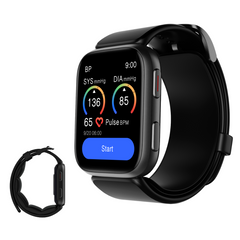
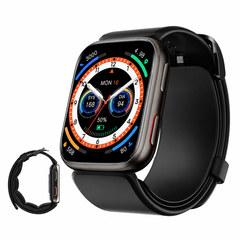
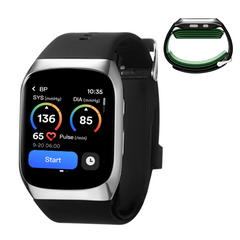
All three YHE models use an integrated inflatable wrist cuff for on-demand BP readings. The main purchase differences are cuff structure, wrist range, display/design and app package—not permission to ignore posture or fit.
|
Model |
Cuff structure |
Listed BP wrist range |
Current positioning |
Key purchase distinction |
|
BP Doctor Fit |
Single inflatable cuff |
Approx. 14–22 cm |
Everyday choice |
Core inflatable-cuff experience at the entry price |
|
BP Doctor Ultra |
Single inflatable cuff |
Approx. 14–22 cm |
Premium choice |
Premium finish, redesigned UI and current 1-Year Premium App package |
|
BP Doctor Med |
Dual inflatable cuffs |
Approx. 14–20 cm |
BP-first choice |
Dual-cuff hardware and a different fit/display format |
For current specifications, packages and prices, compare BP Doctor Fit, Ultra and Med before ordering.
Which Type Should You Choose?
Choose an activity-focused fitness tracker if…
· Your priorities are steps, workouts, heart rate, sleep and everyday wellness trends.
· You do not need an on-demand systolic/diastolic reading from the device.
· You understand that a heart-rate sensor does not automatically make the tracker a BP monitor.
Consider an inflatable-cuff blood pressure watch if…
· You want a portable, user-started wrist BP workflow built into a watch.
· Your wrist fits the model’s stated range.
· You are willing to sit, support the arm, keep the wrist at heart level and remain still for each reading.
· You will use the readings as information to discuss with a health professional rather than as a diagnosis.
Choose a validated upper-arm monitor when…
· Your clinician recommends one for home monitoring.
· You are using readings to support diagnosis, treatment monitoring or medication decisions.
· You want to follow the AHA’s preferred home-monitor format.
The Bottom Line
A fitness tracker is not a blood pressure monitor simply because both are worn on the wrist. Look at the physical measurement method and the actual output. Motion sensors estimate activity. Optical PPG commonly supports pulse-related metrics. A cuff-based blood pressure watch adds inflation and pressure sensing to generate on-demand systolic and diastolic readings. The best choice depends on whether you want general fitness tracking, convenient wrist BP checks, or a validated upper-arm setup for home monitoring.
|
Compare the measurement method before the feature count See the current YHE model comparison to review cuff design, wrist fit and product positioning in one place. |
I. FAQ
Can a fitness tracker measure blood pressure?
Some wearables provide a BP estimate, a calibrated BP feature or a hypertension-related notification, but many activity-focused trackers do not perform a cuff-based BP measurement. Check the device’s stated method and output.
Is heart rate the same as blood pressure?
No. Heart rate is the number of heartbeats per minute. Blood pressure is reported as systolic and diastolic pressure in mm Hg. An optical heart-rate sensor alone is not an inflatable BP cuff.
Do BP Doctor Fit, Ultra and Med measure blood pressure continuously?
No. Their current product documentation describes user-started, on-demand wrist BP readings. Do not describe them as passive or automatic 24-hour BP monitors.
How does an inflatable-cuff blood pressure watch work?
The cuff inflates around the wrist, a pressure sensor detects pulse-related oscillations, and an algorithm derives systolic and diastolic values during the measurement cycle.
Can a blood pressure watch replace an upper-arm monitor?
Do not assume so. The American Heart Association recommends a validated automatic upper-arm cuff-style monitor for home monitoring. Ask a health professional which device is appropriate for your needs.
Which YHE model should I choose?
Fit is the everyday entry choice, Ultra adds a premium finish, redesigned interface and the current Premium App package, and Med uses a dual-cuff design with a smaller listed wrist range. Confirm current specifications on the comparison page before purchase.

Leave a comment
This site is protected by hCaptcha and the hCaptcha Privacy Policy and Terms of Service apply.