

If blood pressure is the main reason you are buying a smartwatch, the first question should not be:
How many sports modes does it have?
It should be:
How does the watch actually take a blood pressure reading?
That matters because today's “blood pressure watches” can work in very different ways.
Some use optical sensors and estimate blood pressure after calibration. Some look for patterns associated with possible hypertension. Others contain a real inflatable cuff inside the watchband and physically apply pressure during a reading.
If you are specifically looking for a blood pressure watch with an inflatable cuff, this guide explains what matters before you buy.
What Is an Inflatable-Cuff Blood Pressure Watch?
An inflatable-cuff watch contains a small air bladder inside the wristband.
When you start a blood pressure measurement, the cuff inflates around the wrist. The device detects pressure oscillations associated with the pulse and processes them into systolic and diastolic values.
This is called the oscillometric method.
BP Doctor Fit's documentation describes exactly this workflow: the wrist air cuff is pressurized during the reading, while pressure signals from the wrist artery are detected and processed.
That makes cuff-based watches fundamentally different from watches that derive BP values from optical sensor data alone.
Inflatable Cuff vs Optical BP Estimation
| Inflatable-Cuff Watch | Optical BP Estimation | |
|---|---|---|
| Physical cuff | Yes | No |
| Cuff inflates during BP reading | Yes | No |
| Pressure signal used | Yes | Usually no |
| External calibration | Depends on device | Often required |
| Measurement type | On-demand cuff measurement | Sensor-based estimate |
| Main advantage | Physical cuff built into wearable | No inflatable cuff required |
Samsung's current U.S. blood-pressure implementation, for example, requires calibration against an upper-arm cuff and re-calibration every 28 days.
An inflatable-cuff BP watch follows a different workflow: the cuff itself is built into the wearable.
The 6 Things I Would Check Before Buying One
1. Is the cuff really built into the watch?
This sounds obvious, but product descriptions can be vague.
Look for language such as:
- inflatable cuff;
- air cuff;
- automatic inflation;
- oscillometric measurement;
- pressure-based BP measurement.
A page that only says “blood pressure tracking” does not tell you how the measurement is produced.
2. Does the watch fit your wrist?
This is more important than most smartwatch features.
A cuff has to fit correctly to work as intended.
Current YHE BP Doctor recommendations are:
| Model | Recommended BP Wrist Fit |
|---|---|
| Fit | 14–22 cm / 5.5–8.7 in |
| Ultra | 14–22 cm / 5.5–8.7 in |
| Med | 14–20 cm / 5.5–7.8 in |
Fit's manual also emphasizes correct cuff contact and wearing tightness during measurement.
Don't buy a watch first and measure your wrist later.
Measure first.
3. Is the measurement on demand or continuous?
This is one of the most common misunderstandings in this category.
An inflatable cuff has to inflate to take a cuff-based BP measurement.
That means a watch can offer:
- manual BP readings;
- scheduled reminders;
- stored results;
without measuring blood pressure continuously every second of the day.
BP Doctor Fit lets users start readings on demand and set measurement reminders.
A reminder is not the same thing as continuous BP measurement.
4. How easy is it to get the wrist into the correct position?
Wrist blood pressure measurement is position-sensitive.
The wrist should remain around heart level during a measurement.
Fit's manual specifically warns that a wrist below heart level may produce a higher result, while a wrist above heart level may produce a lower result. Movement and talking can also interfere.
So a good BP watch is not just one that can inflate.
It should also make the correct measurement routine easy to understand.
5. What happens to your records afterward?
A single result can be useful in the moment.
A series of properly taken readings is much easier to review over time.
Fit stores the latest 10 blood-pressure readings on the watch and allows additional history to be viewed in the BP Doctor App.
The current Fit page also supports BP history, trends and family sharing through the app.
If long-term records matter to you, don't stop at the watch screen.
Check the companion app too.
6. What are you actually paying extra for?
This is where the three current BP Doctor models separate.
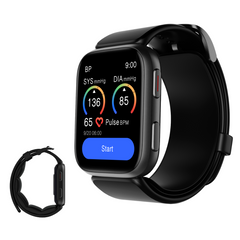
BP Doctor Fit — Everyday Choice
Fit gives you the core inflatable-cuff BP Doctor experience at the lowest current entry price.
$129
It includes:
- single inflatable cuff;
- 1.9" AMOLED;
- 14–22 cm BP wrist fit;
- recent records;
- reminders;
- Guest Mode;
- up to 10 days listed battery life;
- BP Doctor App support.
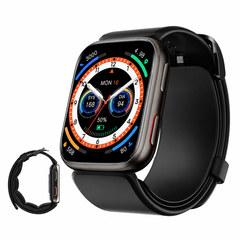
BP Doctor Ultra — Premium Choice
Ultra keeps the same general single-cuff BP approach but adds:
- glossy premium finish;
- redesigned UI;
- 1.9" AMOLED;
- one year of Premium App access;
- up to 10 days listed battery life.
Current price:
$179.
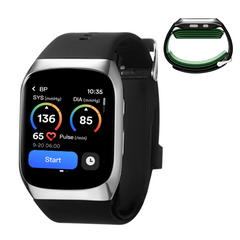
BP Doctor Med — Dual-Cuff Choice
Med is built around two inflatable cuff sections instead of one.
Current price:
$259.
Its recommended wrist range is 14–20 cm, with a 1.61" AMOLED display and up to seven days of listed battery life.
Which One Is “Best”?
There is no honest universal winner.
Choose Fit if:
You want the simplest entry into a cuff-based BP smartwatch.
Choose Ultra if:
You want Fit's basic measurement concept with the premium design and included Premium App.
Choose Med if:
The dual-cuff hardware is the feature you value most.
The most expensive model is not automatically the best model for every wrist or every buyer.
Important: A Wrist Watch and an Upper-Arm Monitor Are Not the Same Tool
The American Heart Association currently recommends an automatic, validated upper-arm cuff monitor for formal home blood-pressure monitoring and notes that wrist devices are more position-sensitive.
That should not be hidden from buyers.
A cuff-based watch is valuable primarily because it brings a pressure-based BP measurement process into something you can wear and carry.
It should not be sold as though upper-arm monitoring no longer has a role.
FAQ
Does a cuff-based blood pressure watch need an upper-arm cuff?
BP Doctor Fit, Ultra and Med use their own integrated inflatable wrist cuffs for routine on-demand measurements.
Is an inflatable-cuff watch the same as an optical BP smartwatch?
No. They use different physical measurement approaches.
Can it measure blood pressure while I am walking?
A proper BP measurement should be taken while still and correctly positioned—not while walking.
Which BP Doctor has two cuffs?
BP Doctor Med.
Which model has the widest listed BP wrist range?
Fit and Ultra currently list approximately 14–22 cm; Med lists 14–20 cm.
Final Takeaway
If you are buying a smartwatch primarily for blood pressure, choose the measurement technology first.
Then compare:
wrist fit → cuff design → position requirements → records → battery → price.
Not the other way around.
Leave a comment
This site is protected by hCaptcha and the hCaptcha Privacy Policy and Terms of Service apply.