

Blood Pressure Watch vs Upper Arm Monitor: When to Use Each
If both products can measure blood pressure, why would someone own both?
Because they solve different problems.
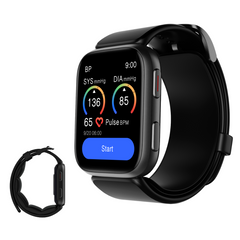
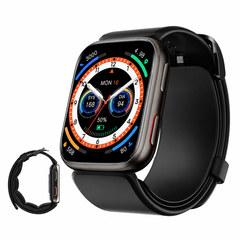
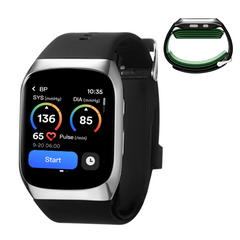
A blood pressure smartwatch is built around wearable convenience.
An automatic upper-arm blood pressure monitor is built around a more traditional home measurement routine.
Trying to decide which one is “better” misses the more useful question:
Better for what?
Quick Comparison
| Factor | Blood Pressure Watch | Upper Arm Monitor |
|---|---|---|
| Wearable | Yes | No |
| Portability | Excellent | Moderate |
| Upper-arm measurement | No | Yes |
| Home measurement station | No | Excellent |
| Daily smartwatch functions | Yes | No |
| Cuff setup | Wrist-based design | Upper-arm cuff |
| Best use | Everyday wearable convenience | Structured home BP routine |
Why Choose an Upper-Arm Monitor?
An upper-arm monitor makes sense when you want:
- a dedicated home device
- consistent upper-arm positioning
- a larger display
- multi-user household use
- a traditional home-monitoring routine
YHE BP Home is designed specifically around this use case.
The user places the arm into the integrated cuff rather than wrapping a separate cuff manually.
Why Choose a Blood Pressure Watch?
A watch may make more sense when you value:
- portability
- everyday wear
- convenient access away from home
- smartwatch functions
- compact form factor
A wearable device can fit into daily life differently from a tabletop upper-arm monitor.
That is its main appeal.
Why These Products Should Not Be Positioned as Exact Substitutes
Measurement location matters.
So does:
- cuff design
- body position
- measurement conditions
- device technology
- intended use
Therefore, you should not assume:
watch reading = upper-arm monitor reading
at every moment.
Two different devices should be used according to their own instructions.
A Better Way to Think About the Two Categories
For many users:
Upper arm monitor
Home routine
Blood pressure watch
Portable routine
That creates a more useful “home + everyday” product strategy than trying to force one product to replace the other in every situation.
Example: A Typical Household Routine
Morning at home:
Use the upper-arm monitor while seated under consistent conditions.
During the day:
Wear the smartwatch as your everyday wearable.
Evening:
Use whichever device fits the routine recommended by your healthcare professional.
The important part is not taking as many readings as possible.
It is using each device appropriately and interpreting trends responsibly.
Can You Compare Watch and Upper-Arm Results?
You can observe how the readings relate, but do not expect perfect numerical identity.
Differences can occur because of:
- measurement site
- timing
- posture
- cuff pressure
- movement
- physiological variation
If you are concerned about persistent differences, discuss them with a healthcare professional.
Who Should Choose BP Home?
YHE BP Home is a better fit for someone prioritizing:
- upper-arm measurement
- automatic inflation
- integrated cuff
- two users
- fixed home use
- large display
- rechargeable battery
Its manual lists support for adult arm circumferences from 18–42 cm.
Who Should Choose a BP Doctor Watch?
A watch is more attractive when:
- portability is more important
- the user wants smartwatch functionality
- a wrist-worn device fits the daily routine
- measurements away from a tabletop setup matter
That is why YHE can logically offer both categories.
They address adjacent needs rather than being identical products.
FAQ
Is a blood pressure watch the same as an upper-arm monitor?
No. The measurement location and product design differ.
Should a watch replace my home upper-arm monitor?
Do not assume the two devices are interchangeable. Follow the intended use and instructions for each device.
Can I own both?
Yes. They can serve different home and portable-use scenarios.
Which is easier to travel with?
A watch is generally much more portable.
Which is better for a fixed home routine?
An automatic upper-arm monitor is generally better suited to a dedicated home setup.
Final Takeaway
Do not ask:
Which one wins?
Ask:
Where will I use it?
At home:
Upper arm monitor
On the go:
Wearable convenience
That distinction makes the product decision much clearer
Leave a comment
This site is protected by hCaptcha and the hCaptcha Privacy Policy and Terms of Service apply.