

How to Choose a Blood Pressure Watch for an Older Adult
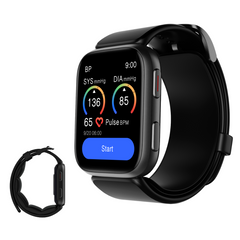
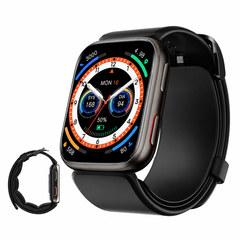
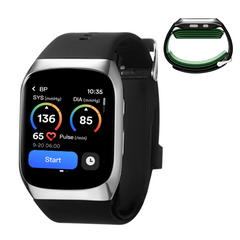
The best blood pressure watch for a senior is not automatically the model with the longest feature list. Start with the measurement method and validation, then check cuff fit, screen readability, physical controls, measurement posture, record review, caregiver support and everyday charging. YHE BP Doctor Fit, Ultra and Med take user-started, on-demand wrist readings with inflatable cuffs; they are not continuous blood pressure monitors and should not be described as FDA cleared. For home monitoring, the American Heart Association recommends a validated automatic upper-arm cuff-style monitor, so a watch should be chosen only when its workflow fits the person and their clinician’s advice.
|
Short answer Choose the device the older adult can fit correctly, read clearly and use in the same correct posture every time. If holding the wrist at heart level is difficult—or the readings will guide diagnosis or treatment—ask a health professional whether a validated upper-arm monitor is the better primary device. |
Why “Senior-Friendly” Is More Than a Large Screen
Age alone does not determine whether someone can use a watch. One person may value portability and independent operation; another may have reduced near vision, lower contrast sensitivity, limited hand dexterity, tremor, memory challenges or difficulty maintaining the required posture. W3C guidance for older web users highlights the value of strong contrast, clear layouts, large controls, understandable instructions and feedback. Those principles are useful when evaluating a device interface, but they do not mean a product has been formally certified as accessible.
The practical question is therefore not “Which watch has the most health features?” It is “Can this person complete a correct measurement without guesswork, and can they review or share the result afterward?”
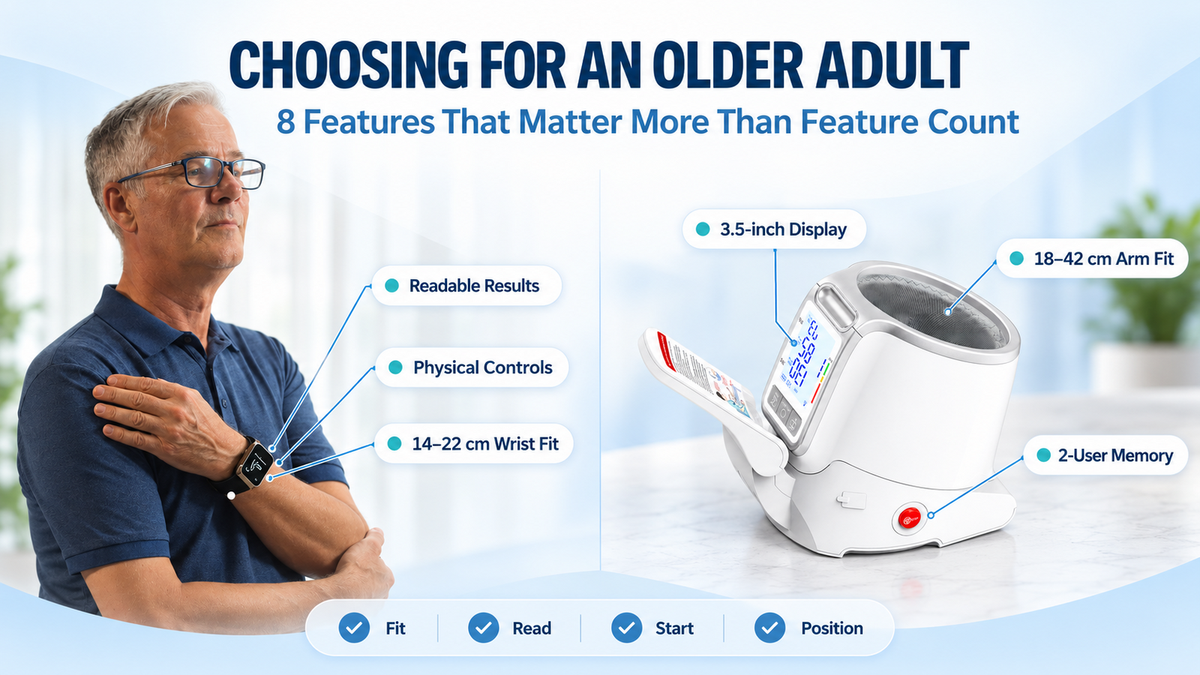
The 8 Features That Matter Most
1. A clear measurement method and appropriate validation
A product page should explain how the device produces a blood pressure result. Fit, Ultra and Med use an inflatable wrist cuff and an oscillometric measurement process. The user starts a reading, the cuff inflates, the pressure sensor detects oscillations and the device derives systolic and diastolic values. This is different from simply displaying heart rate from an optical sensor.
Do not treat the words “blood pressure watch,” “medical grade” or “health watch” as proof of authorization or validation. Ask what population was evaluated, what measurement site is used and whether the exact model has the regulatory or validation status needed for the intended use. The AHA specifically advises choosing a validated monitor and, when choosing for a senior, making sure it has been validated for that population.
2. A cuff that fits the actual wrist or arm
Cuff fit is a measurement requirement, not a comfort detail. A cuff that is too loose, too tight or outside the listed circumference range may not inflate or sense pressure as intended. Measure the wrist or upper arm with a soft tape before ordering, then compare the number with the current product instructions.
· BP Doctor Fit: current listed wrist range approximately 14–22 cm.
· BP Doctor Ultra: current listed wrist range approximately 14–22 cm.
· BP Doctor Med: current listed wrist range approximately 14–20 cm.
· YHE BP Home: current listed upper-arm range 18–42 cm.
For a deeper sizing check, use the blood pressure cuff size guide before purchase. Always confirm current specifications because product versions can change.
3. A display the user can read without strain
Look beyond the advertised screen size. Check the size of the systolic and diastolic numbers, contrast, glare, whether essential results are separated clearly and whether the screen remains visible long enough to read. Fit and Ultra currently list a 1.9-inch AMOLED display at 410 × 502 pixels; Med lists a 1.61-inch AMOLED display at 320 × 360 pixels. BP Home uses a larger 3.5-inch LCD and stays on a table rather than the wrist.
A larger panel does not guarantee larger result text. Before purchase, review an approved interface screenshot or ask support to show the measurement-result screen at actual size. If possible, let the intended user inspect it—not only the purchaser.
4. Physical controls and a short start path
Touchscreens can be convenient, but small targets and swipe gestures may be difficult for someone with reduced dexterity. Fit documentation describes both a touchscreen and physical power/function buttons, with blood pressure available through the menu and a function-button shortcut. Ultra also lists touchscreen, power-button and function-button controls. For Med, confirm the current button layout and start sequence in the latest manual before making an accessibility claim.
A good hands-on test is simple: can the user wake the device, find blood pressure, start, stop and return to the result without help? A reliable three-step route is usually more useful than a long list of secondary apps.
5. A measurement posture the user can repeat
An inflatable wrist watch still requires technique. The user should sit quietly, keep the wrist supported at heart level, stay still and avoid talking during the reading. A bent wrist, unsupported arm or movement can change the result. CDC guidance for home blood pressure measurement also emphasizes a supported back, feet flat on the floor, the cuff on bare skin and at least five minutes of quiet rest.
This is a key senior-specific buying test: can the person comfortably hold the required position for the full inflation and deflation cycle? If shoulder pain, weakness, tremor or limited range of motion makes that difficult, a table-based upper-arm monitor may be easier to use consistently.
6. Records that are easy to review—not just collect
A reading has more practical value when the user can find it again. Fit documentation describes the latest 10 blood pressure records on the watch, with more data available in the BP Doctor app. Ultra currently describes similar on-watch review, measurement reminders and Guest Mode. BP Home stores readings for two users, with up to 99 readings per user according to the current product page.
Before buying, decide who will review the history: the wearer, a family member or a health professional. Then verify the exact export, account, phone compatibility and regional app features needed. A reminder is not an automatic blood pressure measurement; the user must still initiate the BP Doctor reading.
7. Caregiver and family support that respects the user
Some older adults want help with setup or data sharing while still taking measurements independently. Current Ultra materials mention app export and family-sharing support for health information. Because app entitlements and regional availability can change, confirm the feature on the current product page and test the intended account setup before relying on it.
A caregiver workflow should be agreed with the wearer: who can view information, who receives exports and what happens if a result is unexpected. The device should support a conversation with the health care team—not encourage relatives to diagnose or change medication.
8. Charging, support, warranty and real-life ownership
A device that stays uncharged or unused cannot support a routine. Ask who will charge it, whether the cable is easy to identify, whether the app requires a compatible phone and whether printed or online instructions are available. Also check what is not allowed: current BP Doctor guidance says the watches should not be treated as waterproof for showering or swimming.
YHE currently lists a 12-month limited warranty and support for setup and troubleshooting. Confirm the current policy, return terms and regional service before purchase. For an older user, accessible support can matter as much as one extra sensor.
Original YHE 8-Point Senior Usability Checklist
Use this checklist with the intended user before ordering. A “No” does not always disqualify a device, but it identifies where a different model, an upper-arm monitor or caregiver assistance may be more practical.
|
Check |
Pass question |
What to verify |
|
1. Method |
Do we understand how BP is measured? |
Inflatable cuff; on-demand workflow; validation/regulatory status for intended use |
|
2. Fit |
Is the measured wrist/arm inside the listed range? |
Actual circumference, cuff placement and current manual |
|
3. Readability |
Can the user read SYS, DIA and pulse unaided? |
Result-screen text, contrast, glare and screen timeout |
|
4. Controls |
Can the user start and stop without guessing? |
Physical buttons, target size and number of steps |
|
5. Posture |
Can the user stay still with the cuff at heart level? |
Chair, table/pillow support, shoulder and hand comfort |
|
6. History |
Can the right person retrieve the readings? |
On-device records, app, export or two-user memory |
|
7. Help |
Is setup/data-sharing help available if wanted? |
Consent, account access, phone compatibility and support |
|
8. Ownership |
Can the device stay charged and maintained? |
Cable, charging routine, warranty, water limits and return policy |
YHE Fit, Ultra, Med and BP Home: Senior-Relevant Differences
The table below compares purchase-relevant facts, not clinical superiority. No single model is “best for seniors” as a group.
|
Model |
Site / cuff |
Listed fit |
Display |
Senior-relevant workflow |
Regulatory note |
|
BP Doctor Fit |
Wrist / single inflatable cuff |
14–22 cm |
1.9-in AMOLED; 410×502 |
Touchscreen plus physical buttons; on-demand BP; recent records/app |
Do not describe as FDA cleared |
|
BP Doctor Ultra |
Wrist / single inflatable cuff |
14–22 cm |
1.9-in AMOLED; 410×502 |
Physical buttons; on-demand BP; current materials list reminders, Guest Mode and family sharing |
Do not describe as FDA cleared |
|
BP Doctor Med |
Wrist / dual inflatable cuffs |
14–20 cm |
1.61-in AMOLED; 320×360 |
On-demand dual-cuff design; verify current controls and app workflow |
Do not describe as FDA cleared |
|
YHE BP Home CH-S693L |
Upper arm / integrated cuff |
18–42 cm |
3.5-in LCD |
Insert arm, press Start; 2 users × 99 readings; table-based use |
FDA 510(k) cleared: K251102; clearance applies to this exact model |
Review current specifications and packages on the YHE model comparison page before ordering.
Blood Pressure Watch or Upper-Arm Monitor for an Older Adult?
The answer is not always one or the other. A portable wrist watch may make an on-demand check easier to access during daily life, while a dedicated upper-arm device may provide a simpler seated home routine. Some households may use a wearable for convenience and an upper-arm monitor for clinician-directed home monitoring, but the devices should not be assumed interchangeable.
|
If this is the main need… |
Consider… |
Why |
|
Clinician-directed home monitoring, diagnosis support or treatment follow-up |
A validated automatic upper-arm cuff-style monitor |
Matches AHA’s preferred home-monitor format; discuss exact device with the health care team |
|
Portable, user-started wrist checks and the person can follow wrist-position instructions |
An inflatable-cuff BP watch |
Convenient access, provided fit and technique are appropriate |
|
Difficulty holding the wrist at heart level or navigating a watch |
A table-based integrated upper-arm monitor |
May reduce wrist-position and small-interface burden |
|
Two people need separate home histories |
A monitor with verified multi-user memory |
BP Home currently lists two users with 99 readings each |
A Three-Minute Hands-On Test Before You Buy
1. Measure first. Measure the bare wrist or upper arm; do not estimate from clothing size.
2. Read the real result screen. Use an approved screenshot or demo. Ask the intended user to identify SYS, DIA and pulse without coaching.
3. Rehearse the posture. Sit with back supported and feet flat. Support the forearm and test whether the wrist can remain at heart level comfortably.
4. Count the actions. From the watch face or powered-off state, count how many taps or button presses are needed to start and retrieve a result.
5. Test the support plan. Confirm charging, app compatibility, data export, family access if wanted, printed guidance and the return/warranty route.
How to Take a More Consistent Reading
Follow the current device manual and the health care team’s instructions. General home-measurement guidance includes:
· Avoid exercise, smoking and caffeinated drinks for 30 minutes before measurement; follow clinician guidance for food, alcohol and medications.
· Empty the bladder and sit quietly for at least five minutes with the back supported and feet flat.
· Place the cuff on bare skin and make it snug without exceeding the device’s fit range.
· Support the arm and keep the cuff at heart level; for a wrist watch, keep the wrist straight and supported.
· Do not talk, text or move during inflation and deflation.
· When advised, take two readings one or two minutes apart and record them for the health care team.
For model-specific steps, see the YHE user guide. Home readings do not replace regular care, and medication should not be changed because of a wearable result without speaking with a qualified health professional.
Common Buying Mistakes
Choosing by screen size alone
Evaluate result-text size, contrast, glare and the full measurement path. A nominally large screen can still use small controls or dense menus.
Assuming a reminder means automatic BP measurement
Fit, Ultra and Med use user-started on-demand blood pressure readings. A reminder can prompt the user; it does not make the device a passive or continuous BP monitor.
Ignoring wrist position
An integrated cuff does not remove posture requirements. If the user cannot repeat the supported heart-level position, consider a different setup.
Treating every YHE product as FDA cleared
Do not make that claim. The current FDA clearance identified here is for the exact BP Home model CH-S693L under K251102. It does not transfer to Fit, Ultra or Med.
Letting a family member choose without the wearer
Whenever possible, involve the person who will use the device. Their vision, hand comfort, privacy preferences and routine determine whether the product will actually be used.
The Bottom Line
A blood pressure watch for a senior should be judged by successful use, not by feature count. Confirm the measurement method, exact cuff fit, readable results, simple controls, repeatable posture, retrievable history, wanted caregiver support and a realistic charging/support routine. Fit and Ultra offer larger listed watch displays and a 14–22 cm wrist range; Med uses a dual-cuff design with a listed 14–20 cm range. If the user cannot comfortably maintain wrist position—or the goal is clinician-directed home monitoring—an automatic upper-arm device such as BP Home may be the more practical path.
|
Compare the workflow, not just the product name Review Fit, Ultra, Med and BP Home side by side, then choose the device the intended user can fit, read and operate correctly. |
COMPARE YHE BLOOD PRESSURE OPTIONS
I. FAQ
What is the best blood pressure watch for seniors?
There is no universal best model. Prioritize an appropriate measurement method, correct cuff fit, readable results, simple controls and a posture the user can repeat. For home monitoring, the AHA recommends a validated automatic upper-arm cuff-style monitor, so ask a health professional which device fits the intended use.
Are wrist blood pressure watches accurate enough for older adults?
Do not generalize across products or users. Wrist readings are sensitive to fit and position, and the AHA states that wrist monitors are less reliable than its preferred upper-arm format. Review validation for the exact model and population, use correct technique and compare the device with professional equipment as advised.
Do BP Doctor Fit, Ultra or Med measure blood pressure automatically all day?
No. Their documented BP workflow is user-started and on demand. Reminders are prompts, not continuous, passive or automatic 24-hour BP measurement.
Which YHE option has the largest display?
Fit and Ultra currently list 1.9-inch AMOLED watch displays, Med lists a 1.61-inch AMOLED display, and the table-based BP Home lists a 3.5-inch LCD. Check current pages because specifications can change.
Can a family member help review readings?
Current product materials describe app records and, for Ultra, family-sharing support. Confirm phone compatibility, account permissions and regional feature availability before relying on this workflow. BP Home currently provides separate memory for two users but is not presented here as remote family sharing.
Is YHE BP Home FDA cleared?
The current BP Home product page identifies model CH-S693L and FDA 510(k) clearance K251102. That clearance applies to the exact cleared device; it does not mean BP Doctor Fit, Ultra or Med are FDA cleared.
What if the older adult cannot hold a wrist watch at heart level?
A table-based automatic upper-arm monitor may be easier to use consistently. Discuss the intended monitoring purpose and device choice with the person’s health care team.
What wrist size fits BP Doctor watches?
Current listings state approximately 14–22 cm for Fit and Ultra and 14–20 cm for Med. Measure before ordering and verify the latest manual and product page.

Leave a comment
This site is protected by hCaptcha and the hCaptcha Privacy Policy and Terms of Service apply.